Curly hair coach helping you better understand your naturally curly hair through easy-to-follow tutorials, science-based haircare tips, and problem-solving.
How to Build a Curl Routine That Lasts, Step-by-Step | Moisture-Hold Balance Framework
|
If your curls look great right after diffusing but frizz out, collapse, or lose definition by the end of the day — you’re probably not dealing with a product problem. You’re dealing with a routine problem. Most people assume they need a different gel, or more moisture, or a better leave-in. But if the underlying routine isn’t balanced, switching products just moves the problem around. This is something I see with curl coaching clients all the time. They’re using good products, but the routine itself isn’t balanced. Once we fix the structure, results become more consistent — not because the products changed, but because the layers are working together correctly. How to Build a Curl Routine That Lasts, Step-by-Step | Moisture-Hold Balance FrameworkThis video and guide introduces the Moisture–Hold Balance Framework — the same framework I use with my curl coaching clients to help them build routines that actually last. It’s part of my Beginner Curl Series, where I teach you how to choose the right products, layer them correctly, and get consistent results. The Moisture–Hold Balance Framework
Every step in your curl routine either adds conditioning to your hair or provides hold. The problem is that most people don’t realize conditioning builds across the routine — it doesn’t just come from your conditioner. Here’s the core principle:
When that balance is off:
Switching products alone won’t fix this. The balance between conditioning and hold has to be right first. Once you understand how conditioning builds across your routine, you can make intentional adjustments instead of guessing. The Four-Step Routine StructureThe routine structure I use is straightforward: 1. Shampoo → 2. Conditioner → 3. Prep → 4. Gel The first three steps add conditioning, and even sometimes the last step. The gel step provides structure and hold. Each step affects how well the next one can do its job — which is why the order and the product choices at each step matter. By the end of this breakdown, you’ll be able to diagnose what’s going wrong with your routine — whether your hair is dry and brittle, not holding, or weighed down — and know exactly what to adjust. Step 1: Shampoo (Cleanse)Your shampoo sets the foundation for everything that comes after. Its job is to remove buildup so your products can actually work. What to Look ForYou want a shampoo with enough cleansing power to actually remove buildup. What most people don’t realize is that shampoos also contain conditioning ingredients — and if your shampoo is overly conditioning, you’re already adding to your moisture load before you even start styling. If your step one product starts with a ton of moisture, you lose control over the moisture–hold balance from the beginning. How to EvaluateAfter rinsing, your hair should feel:✅ Clean If your hair feels:❌ Slippery, soft, coated, or oily → the shampoo is too conditioning Ingredient Tip: How to Determine Cleansing AbilityLook near the top of the ingredient list for the primary cleansing agent. This gives you a general idea of cleanse strength:
This is generally true, but not absolute — formulas vary. You must test to know for sure. Product ExamplesStrong Clarifying Cleanse
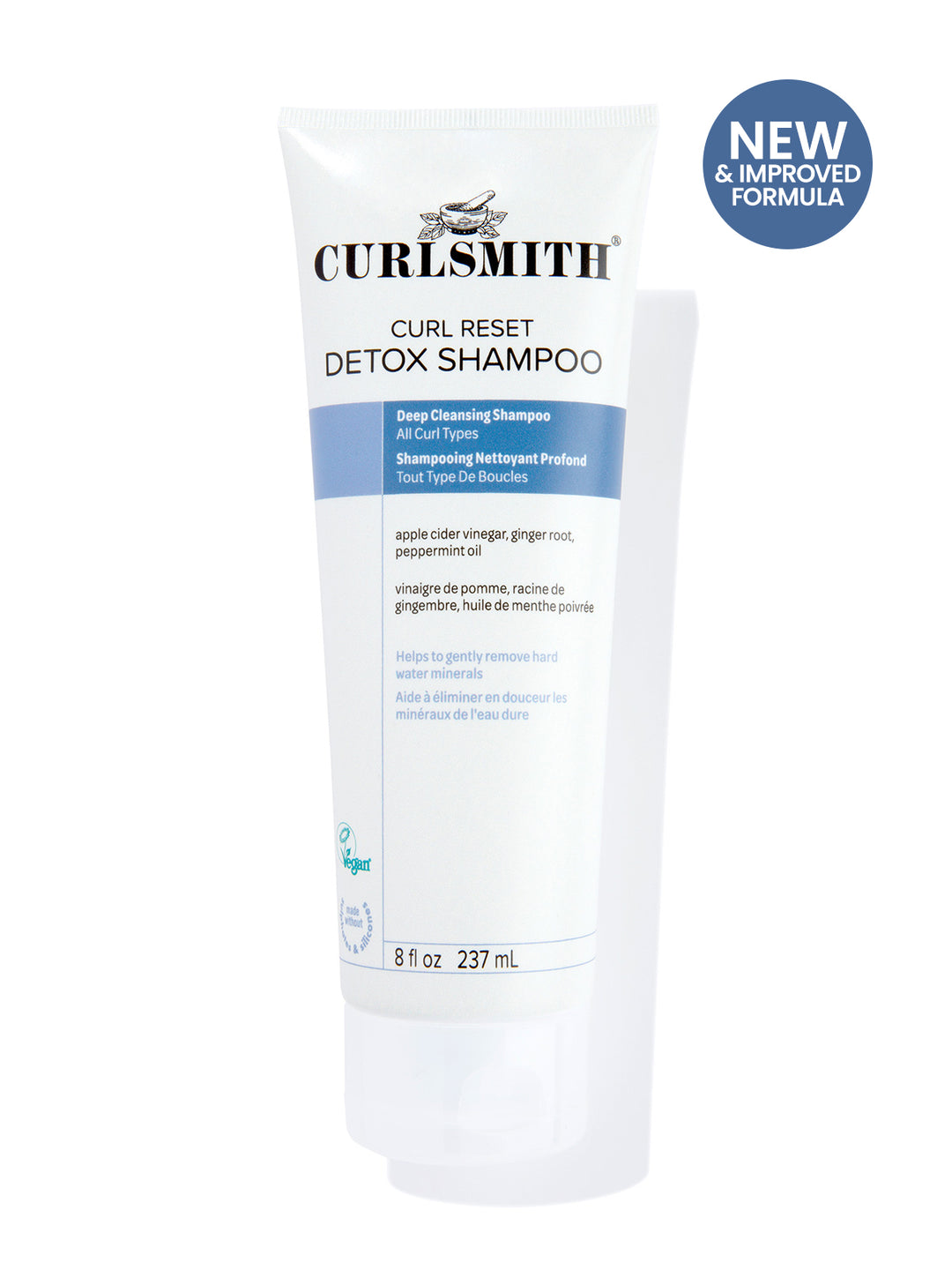
Curlsmith Curl Reset Detox Shampoo
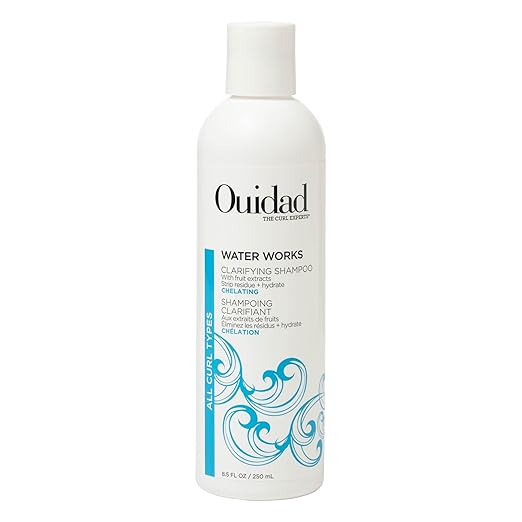
Ouidad Water Works Clarifying Shampoo
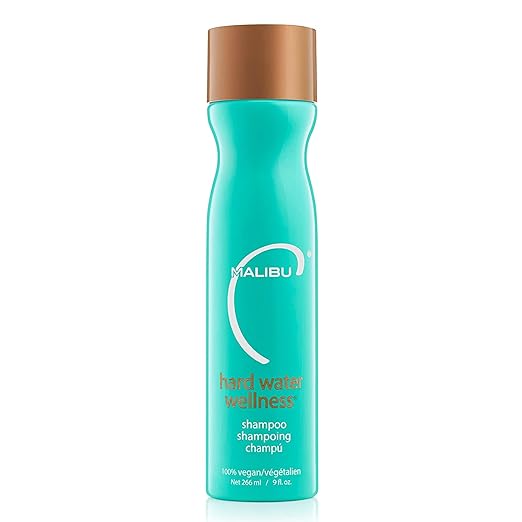
Malibu C Hard Water Wellness Shampoo Balanced Everyday Cleanse
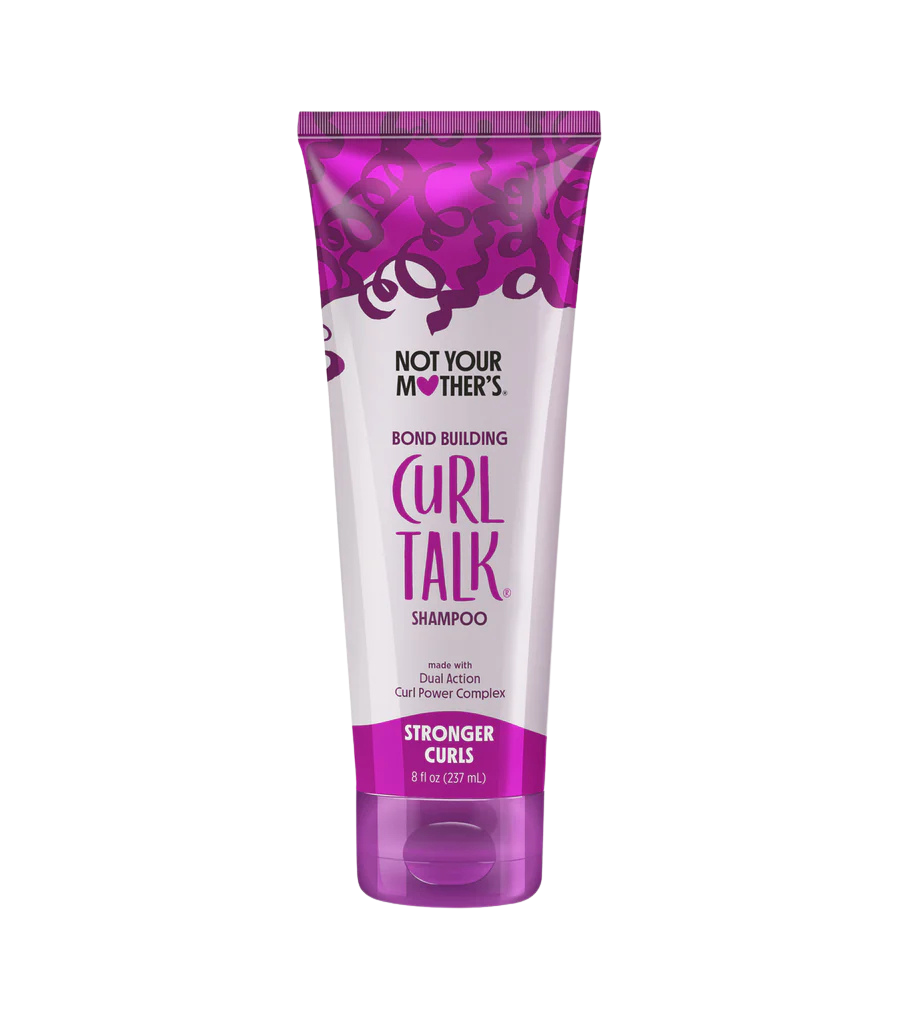
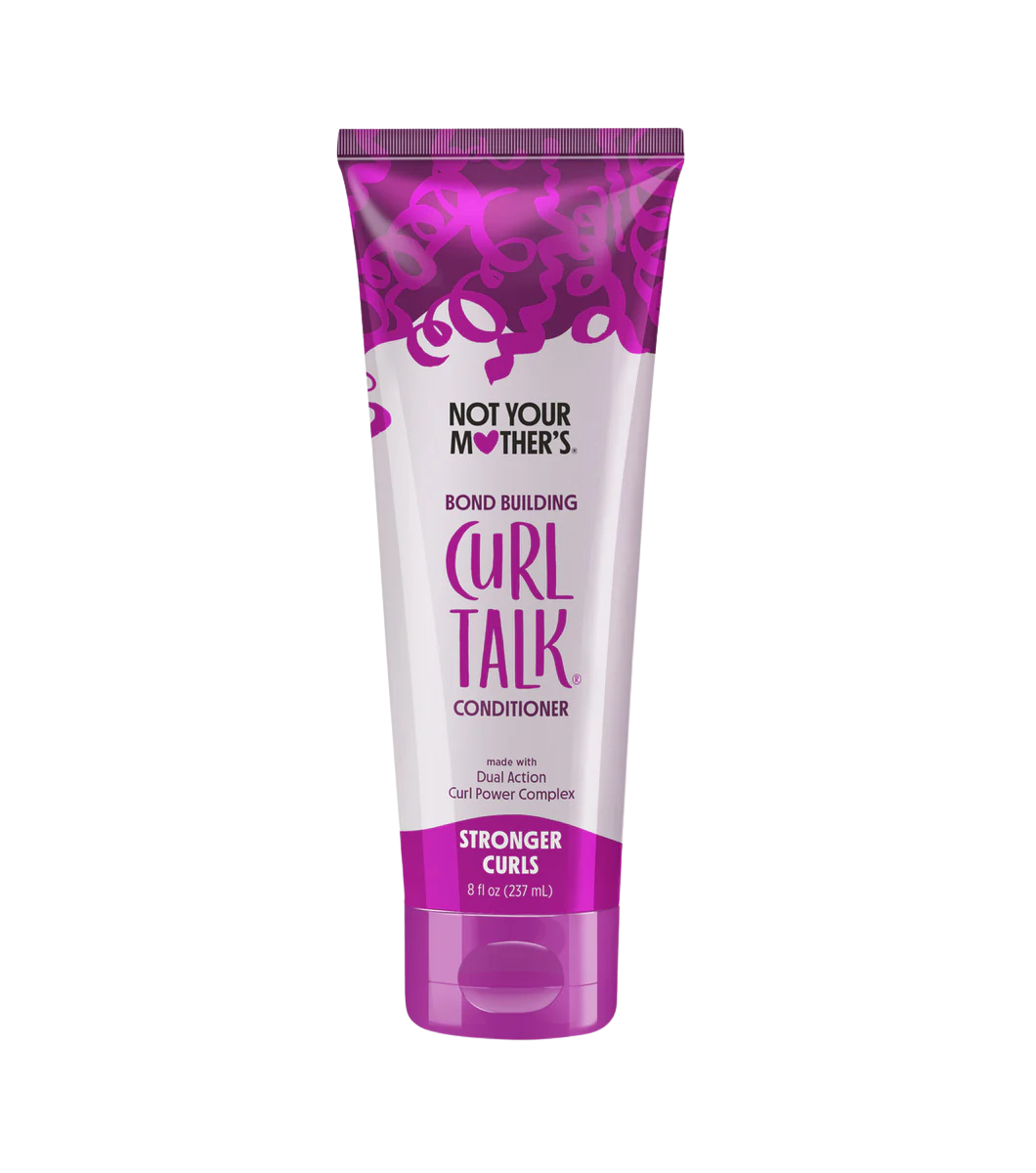
Not Your Mother’s Curl Talk Bond Building Shampoo
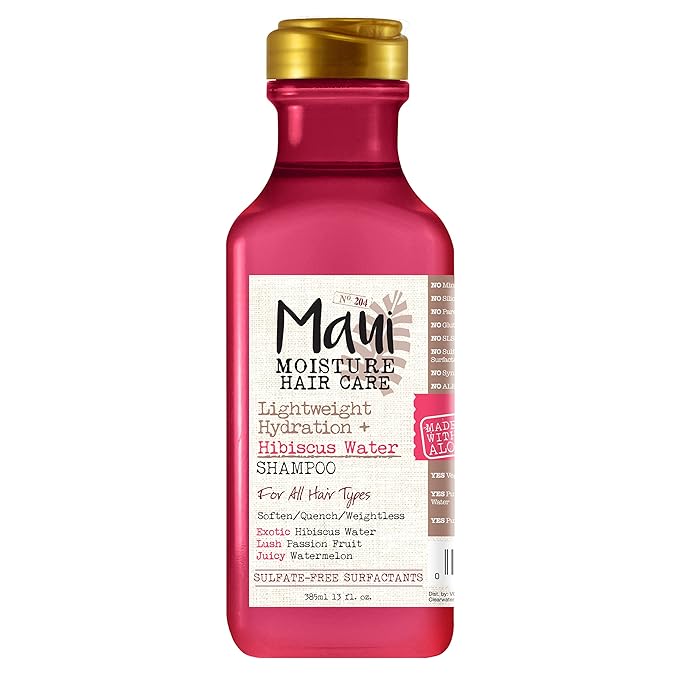
Maui Moisture Lightweight Hydration + Hibiscus Water Shampoo Step 2: Rinse-Out Conditioner (Start of Conditioning Build)Your rinse-out conditioner establishes the baseline level of conditioning entering your routine. Whatever softness and slip you build here carries into every step that follows. What to Look ForThe right conditioner depends on your hair. Lightweight options give you less conditioning load going into styling. Richer options give you more — which can be exactly right for some hair types, but can reduce hold capacity for others. The key is choosing a level that matches what your hair actually needs, not just grabbing the most moisturizing option. How to EvaluateAfter rinsing, your hair should feel: ✅ Soft and manageable If your hair feels: ❌ Overly soft, coated, oily, or limp → too much conditioning Ingredient Tip: How to Determine Conditioning LevelLook near the top of the ingredient list for conditioning agents. This gives you a general read on how rich a conditioner is:
Product ExamplesLightweight & Mediumweight Conditioners
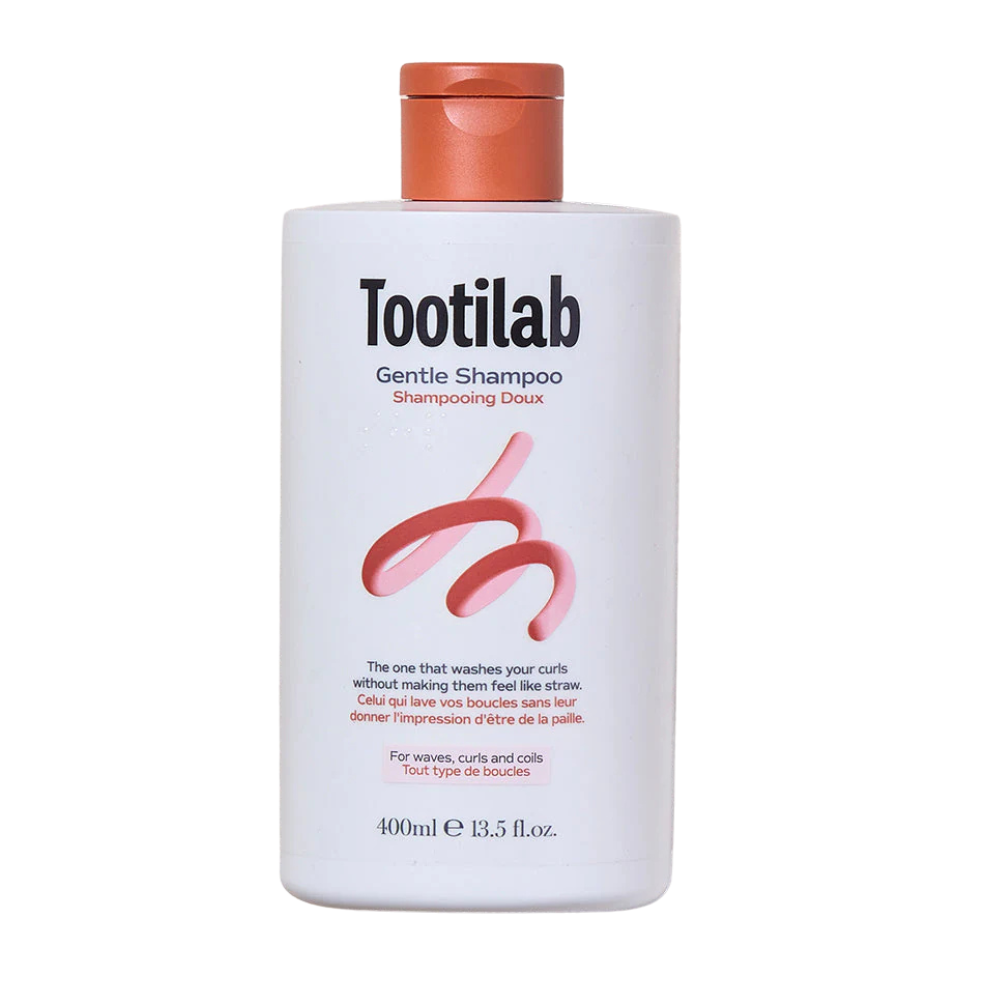
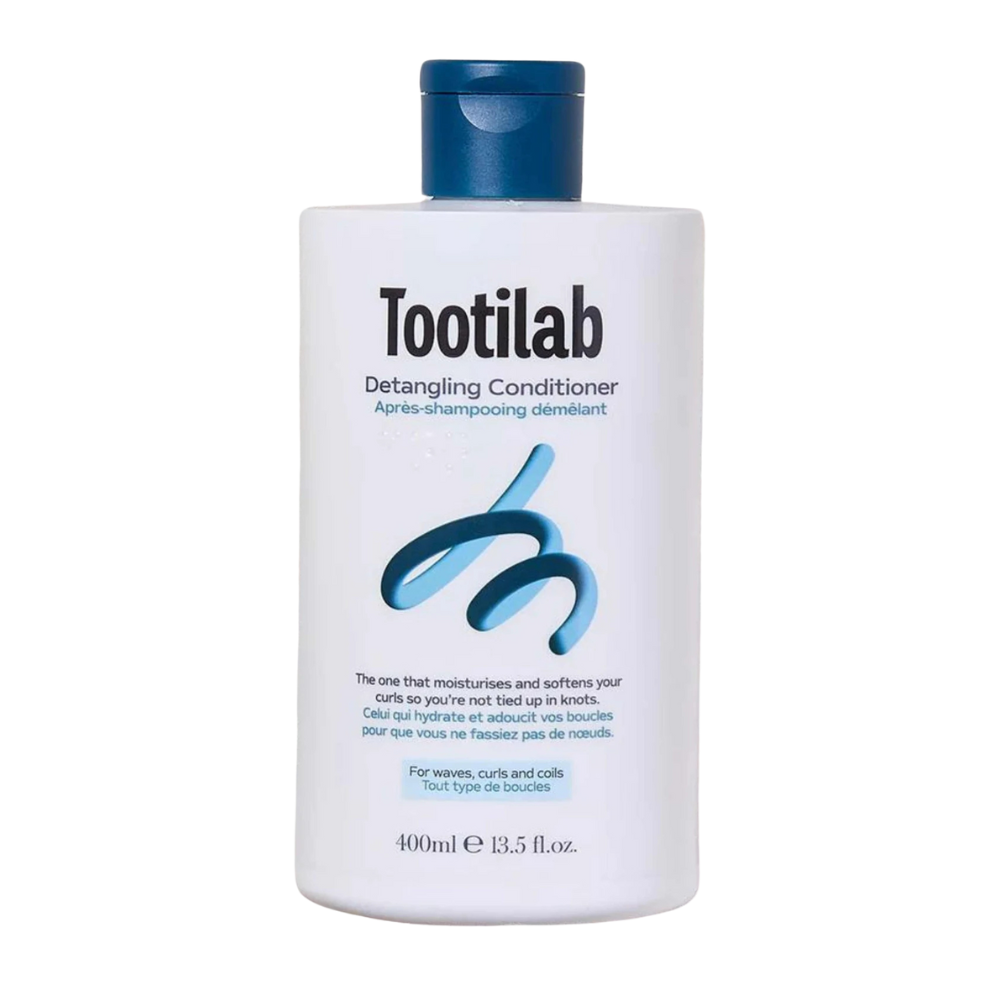
Tootilab Detangling Conditioner
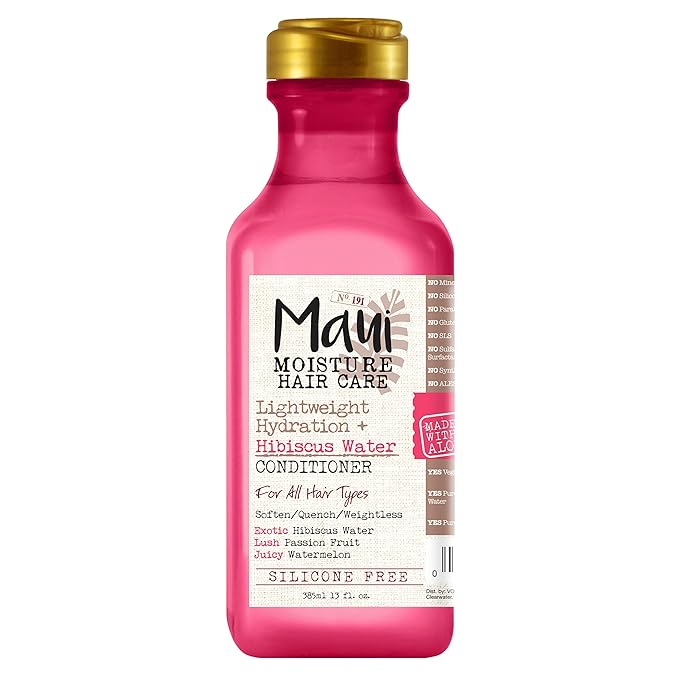
Maui Moisture Lightweight Hydration + Hibiscus Water Conditioner
Not Your Mother’s Curl Talk Bond Building Conditioner Light & Mediumweight Deep Conditioners
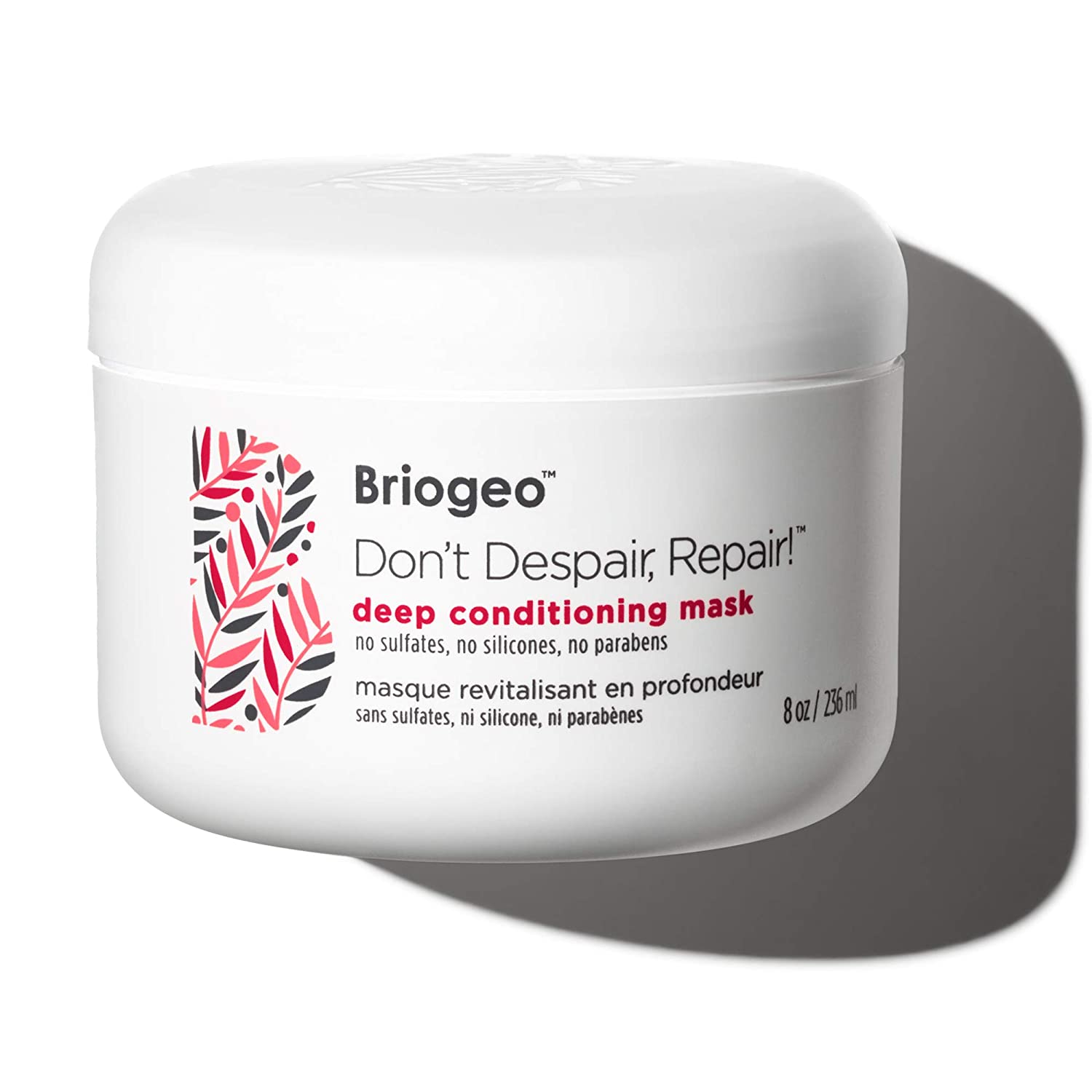
Briogeo Don’t Despair, Repair!™ Deep Conditioning Hair Mask
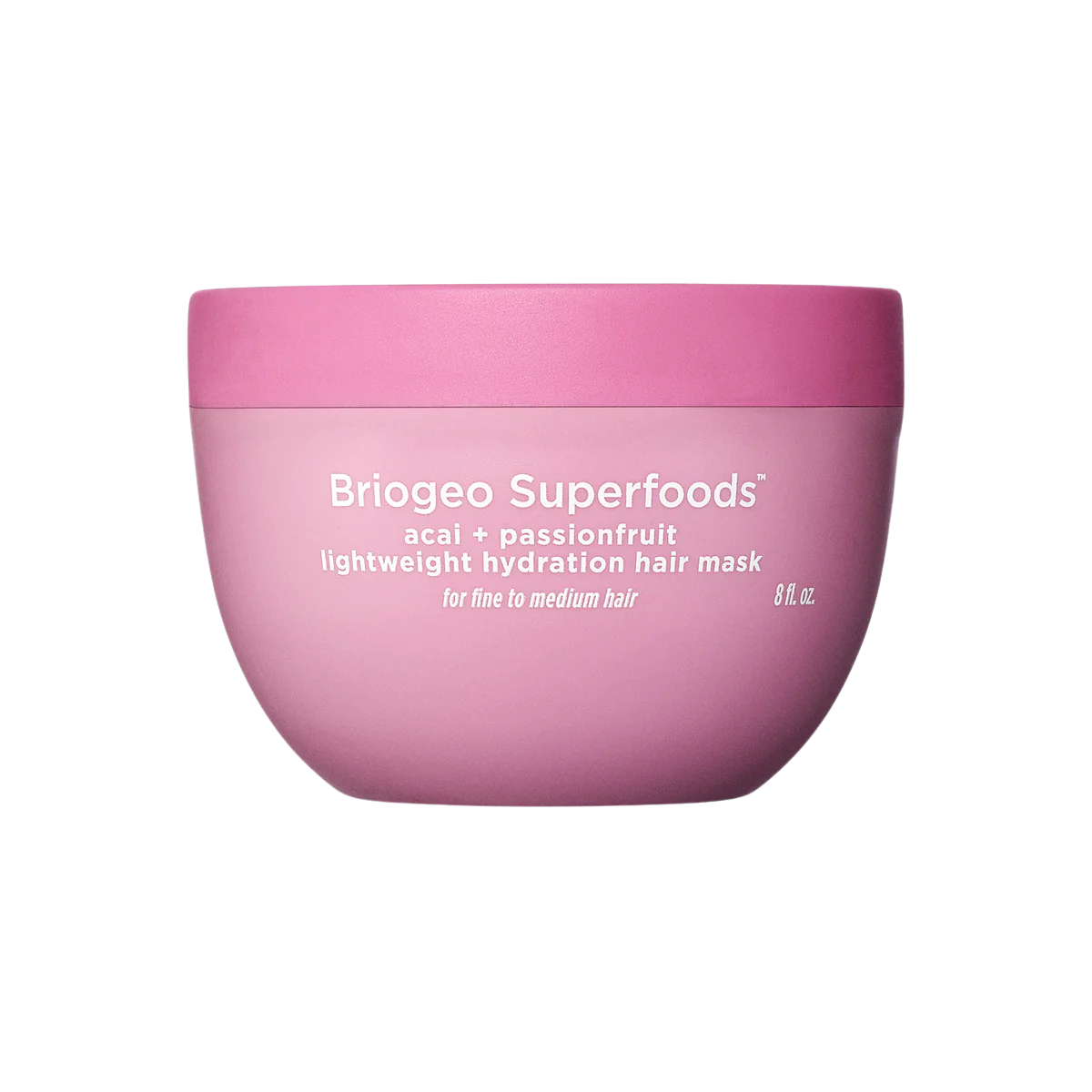
Briogeo Superfoods Acai Passionfruit Lightweight Hydration Hair Mask Step 3: Prep Step (Conditioning Dial)The prep step is where you have the most control. Think of it as a dial — you can turn conditioning up or down here based on how your hair feels coming out of the conditioner. What to Look ForThe prep step can include:
This is also the step where imbalance most often starts. Adding too much conditioning here means your gel has to work harder — and most gels can’t fully compensate. How to Evaluate and Adjust✅ If your hair already feels soft coming out of conditioner → keep this step light or skip additional conditioning More conditioning at this step means you’ll need a stronger hold gel to maintain curl structure. Ingredient Tip: How to Determine Conditioning LevelLook near the top of the ingredient list for conditioning agents. This gives you a general read on how rich a conditioner is:
Product ExamplesLightweight Heat Protectant
Curlsmith Miracle Shield Heat Protection Spray
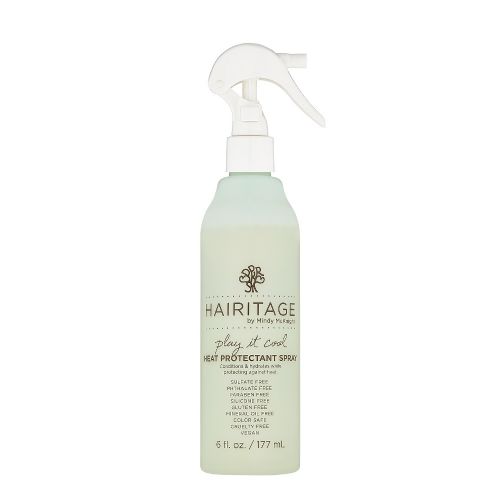
Hairitage Play It Cool Argan Oil Heat Protectant Spray Leave-In + Heat Protectant Combo
Living Proof Leave-In Conditioning Spray
Not Your Mother’s Curl Talk Leave-In Conditioner Curl Cream (Higher Conditioning)
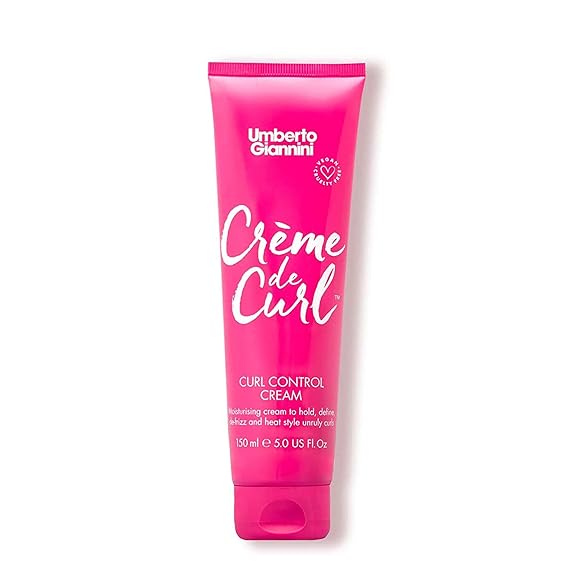
Umberto Giannini Crème De Curl Control Cream Step 4: Gel (Hold Step)Gel is the only step in the routine that provides structure and frizz control. Everything before it adds conditioning, and sometimes even the gel. What to Look ForNot all gels are equal. They vary in:
How to EvaluateA common misconception: forming a cast means your gel worked. Cast tells you the gel was applied correctly and the water-to-product ratio was probably right. It does not guarantee lasting hold. The real test is how your curls behave after you break the cast — and how they hold up through the day. No Cast → Not Enough Hold If you don’t get a cast and your curls frizz or fall as they dry, the gel does not have enough hold (assuming proper application). Cast, But Falls → Not Enough Longevity If you get a cast but your curls frizz or expand after breaking it, or fall apart by end of day, the gel does not have enough long-lasting hold. Cast + Lasts → Strong Hold If you get a cast and your curls stay intact after breaking it and hold their shape through the day, the gel has enough hold and longevity. Ingredient Tip: How to Determine Hold AbilityLook for film-forming ingredients near the top of the list — these are what actually create hold:
Formulations can vary greatly, such as the addition of conditioning ingredients, so hold will vary. You’ll have to test to know for sure. Product ExamplesMedium Hold
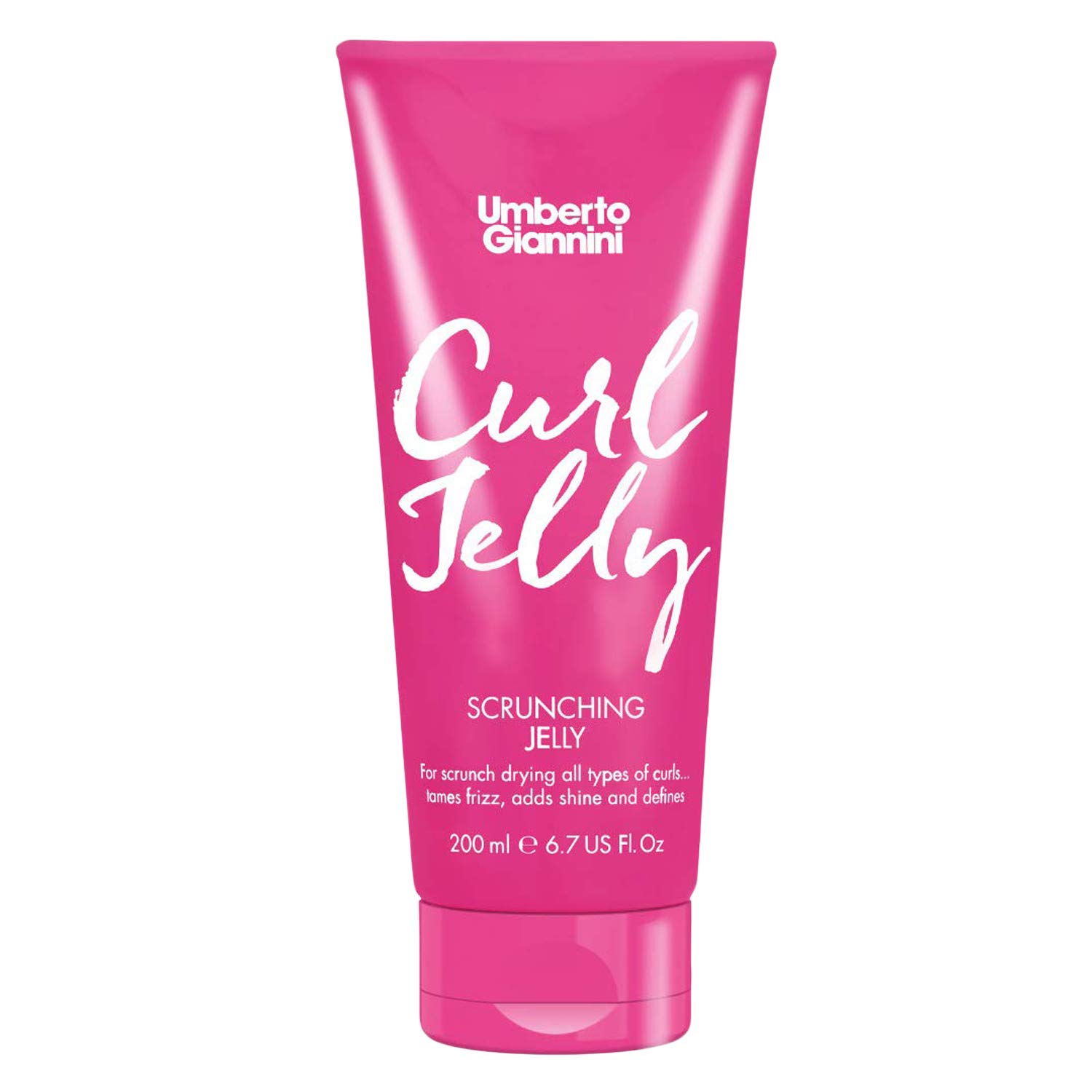
Umberto Giannini Curl Jelly Scrunching Jelly
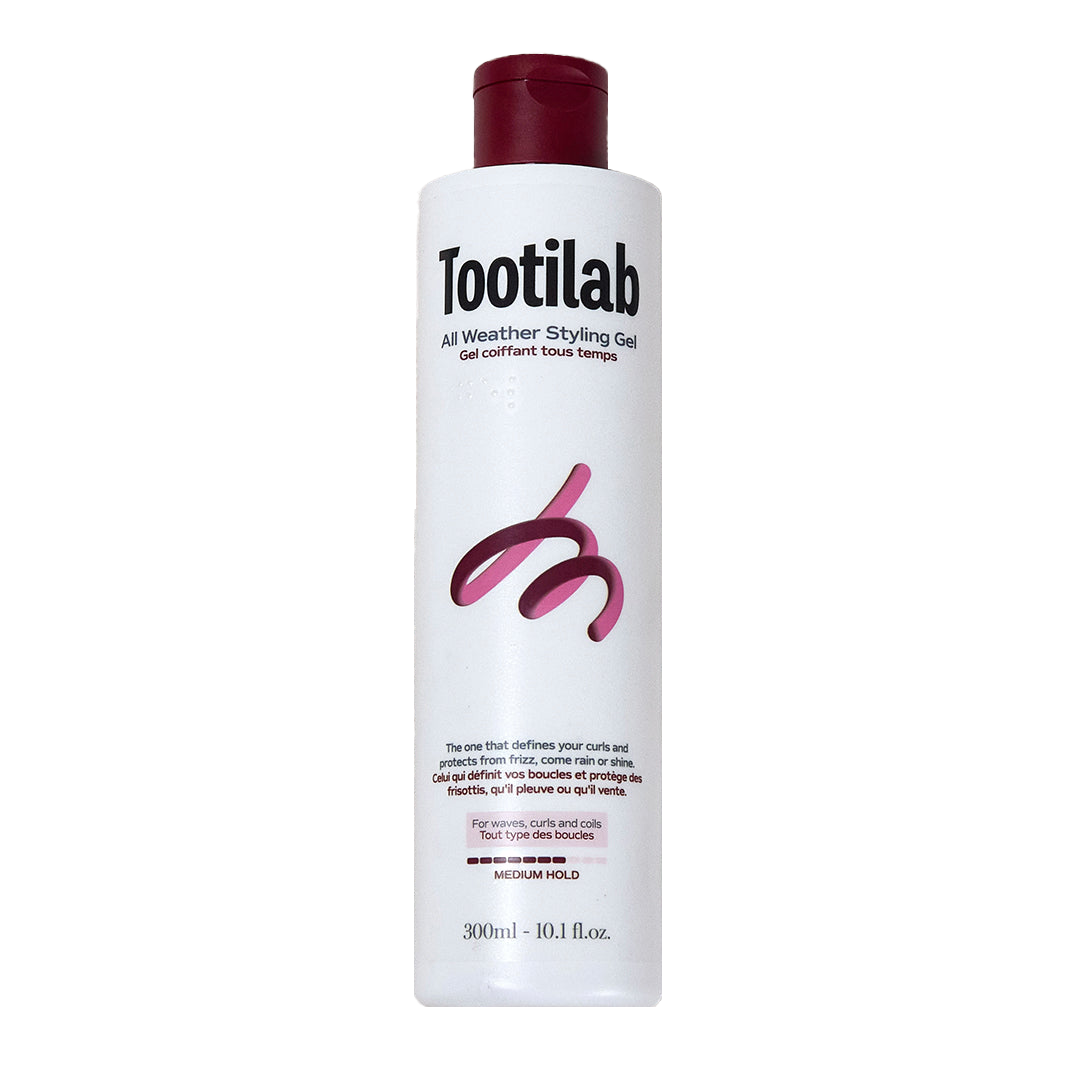
Tootilab All Weather Styling Gel Strong Hold
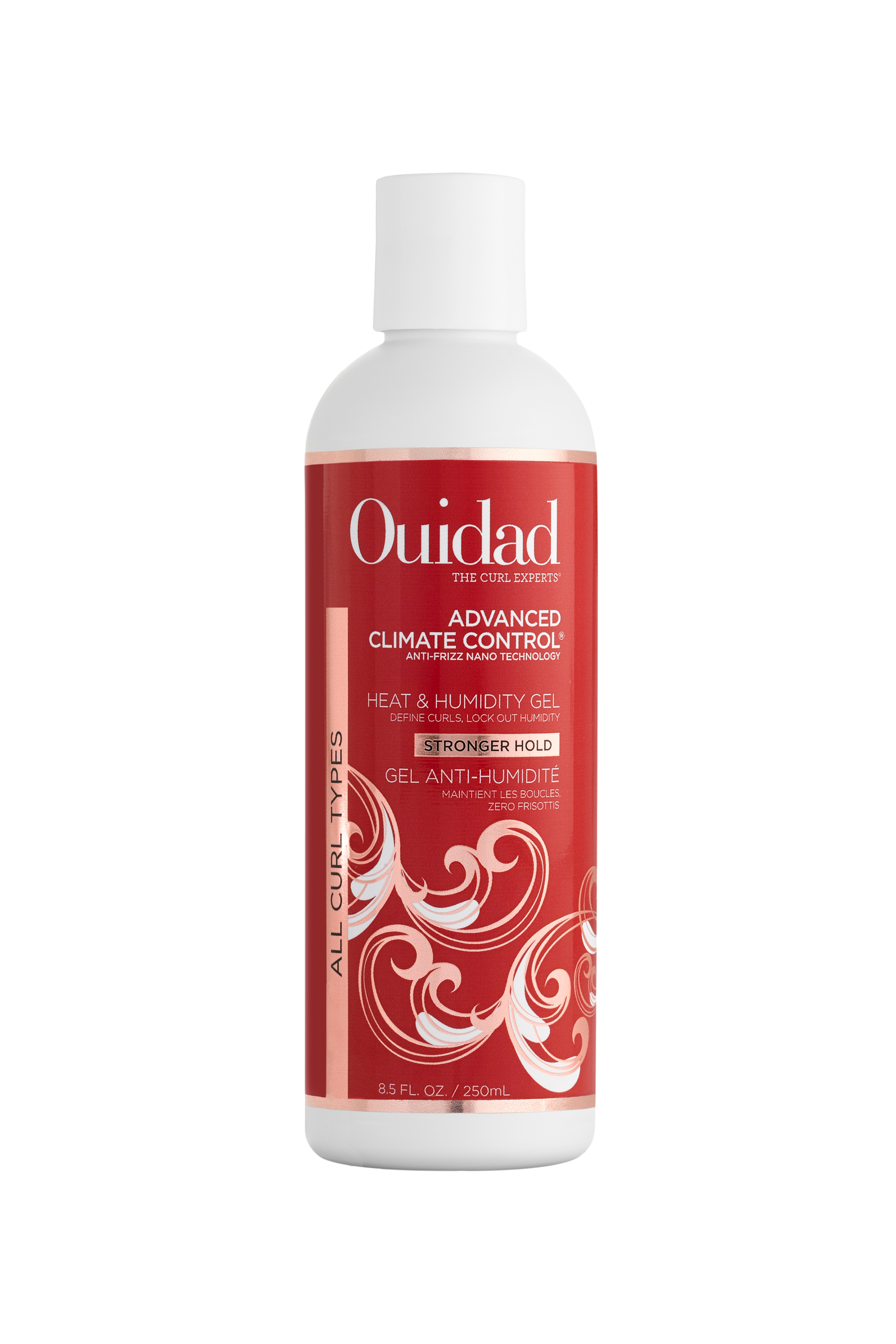
Ouidad Advanced Climate Control Heat & Humidity Stronger Hold Gel
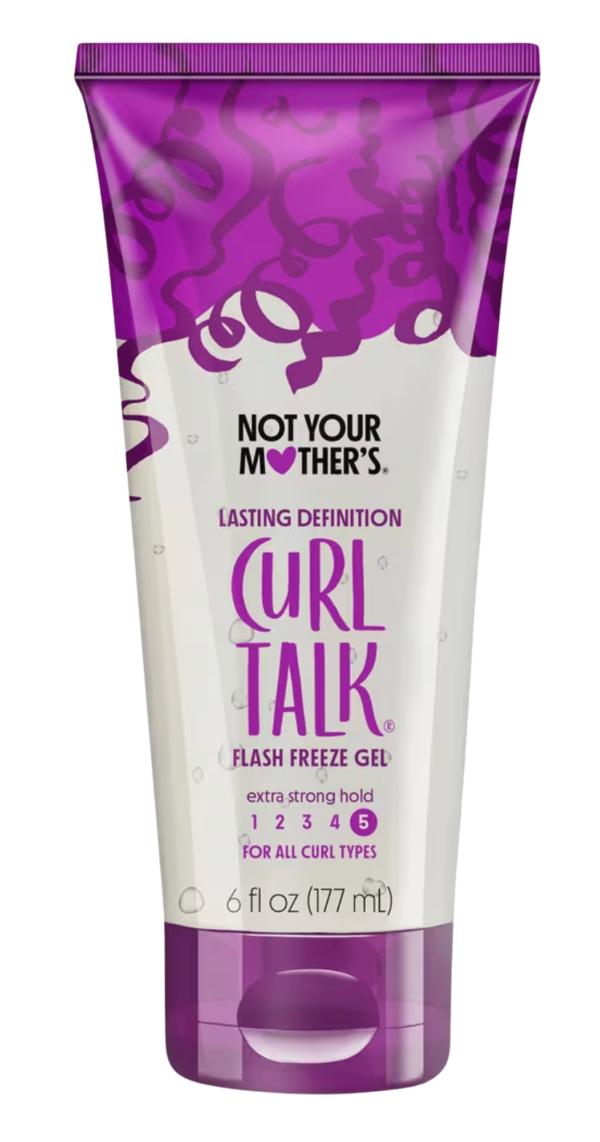
Not Your Mother’s Curl Talk Flash Freeze Gel
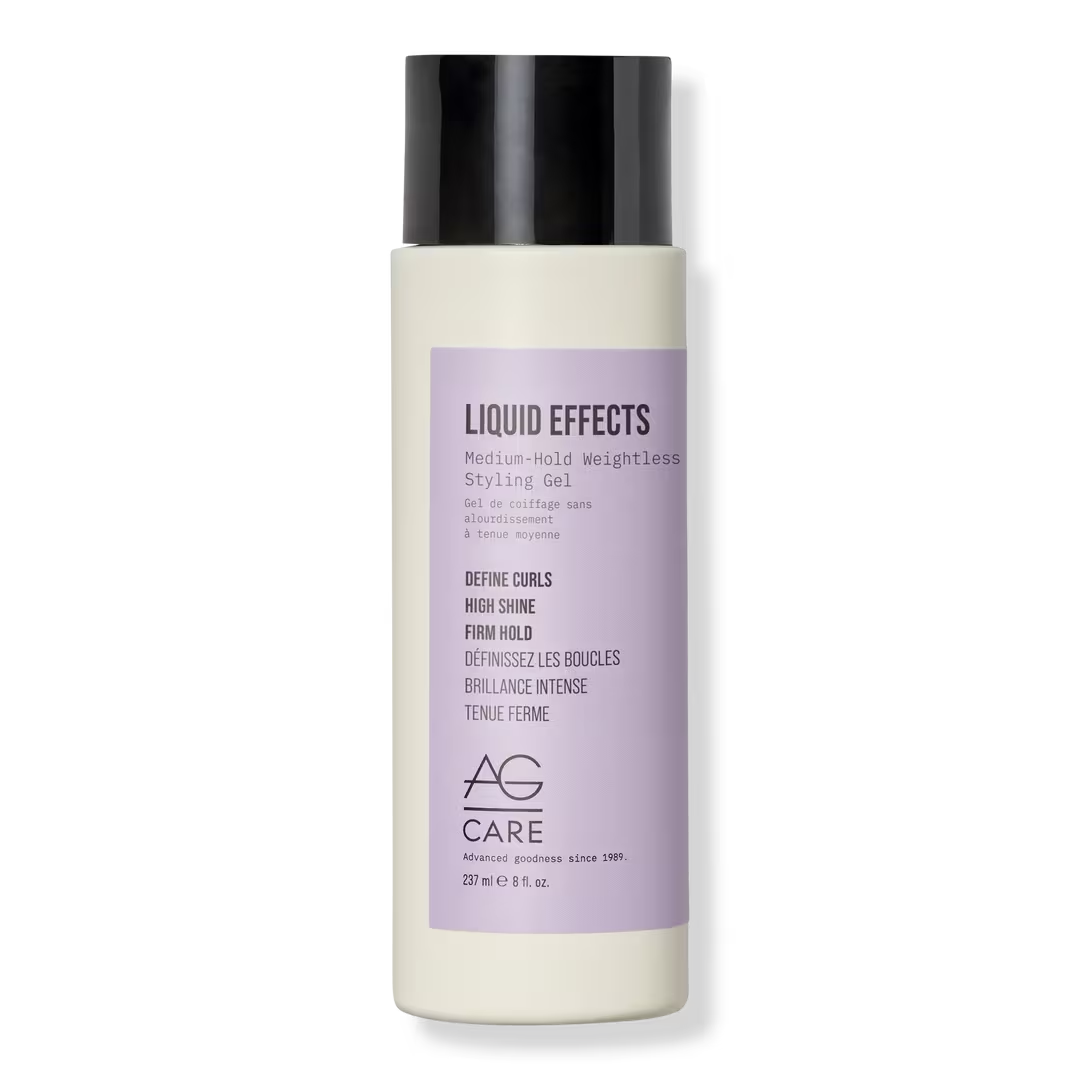
AG Liquid Effects Medium Hold Weightless Styling Gel
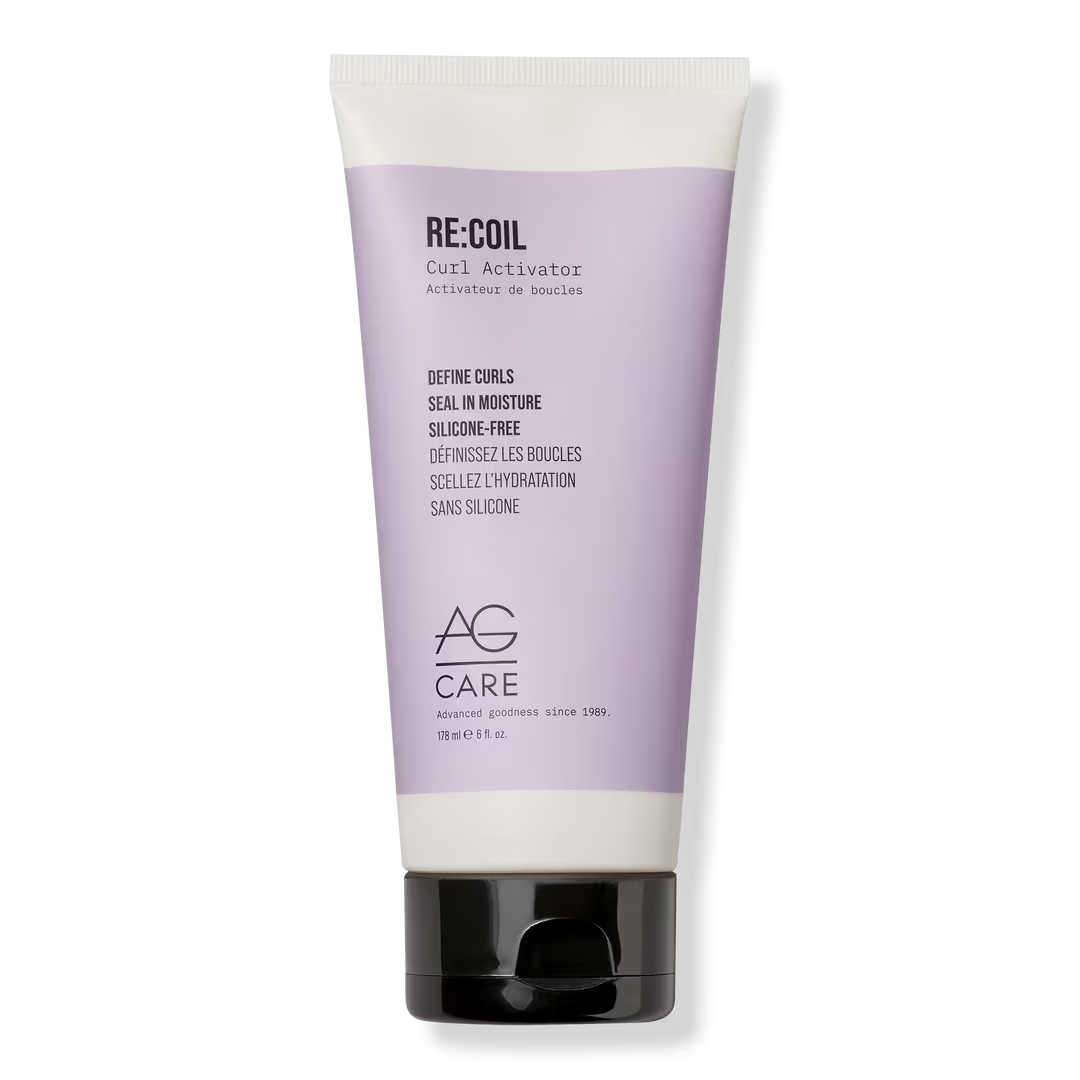
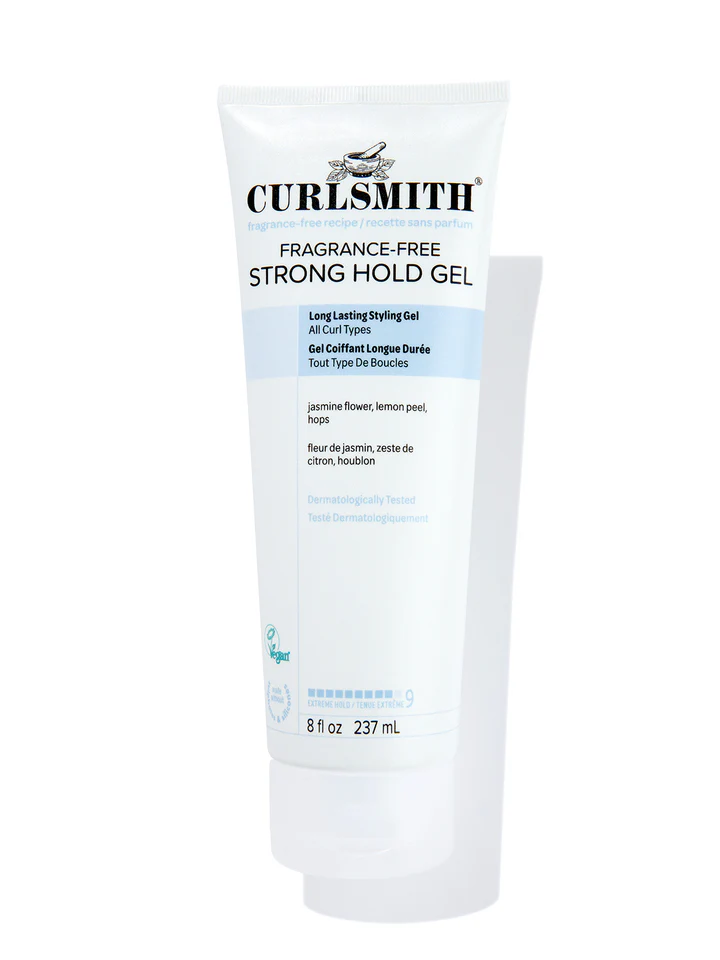
Curlsmith Fragrance-Free Strong Hold Gel How These Steps Work Together: Routine Combination ExamplesThese examples show how conditioning level changes across different routine combinations. In all of them, hold stays medium to strong — what changes is the amount of conditioning going in. The goal is to stay within one consistent conditioning level so your gel can actually hold. Low ConditioningLiving Proof Leave-In Conditioning Spray + Curlsmith Strong Hold Gel Medium ConditioningCurlsmith Miracle Shield + AG Liquid Effects Gel High ConditioningAG Re:Coil Curl Activator Cream + Ouidad Advanced Climate Control Gel Each product adds to your total conditioning level — including your gel. This is how you control the outcome of your routine. You can also mix and match these to customize your moisture-hold balance. How to Evaluate Your Results Over TimeWash day results don’t tell you if your routine is working. Longevity does. Don’t evaluate your hair only right after diffusing. Pay attention to:
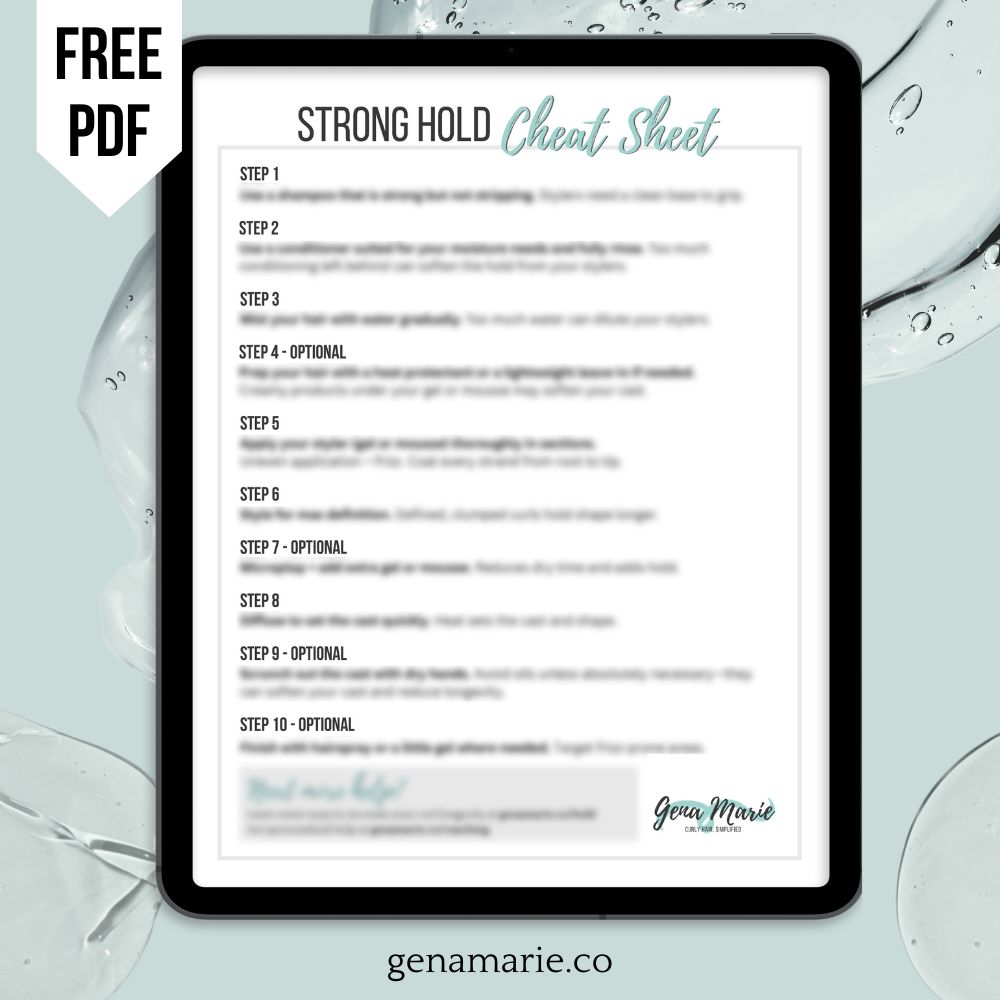
This is where you diagnose — not guess. Here are the three result patterns and what each one means: Pattern 1: Dry or Brittle❌ Hair feels rough, stiff (not from cast — overall feel), or lacks softness and flexibility. Pattern 2: Not Holding❌ Hair looks good right after diffusing but expands, frizzes, or loses definition — worsens by end of day or day two. Pattern 3: Weighed Down or Over-Soft❌ Hair feels overly soft or mushy, lacks volume, or curls stretch and don’t form well. The bottom line: focus on adjusting the balance, not adding random products. When Your Routine Is Balanced But Hold Still Breaks DownIf you’ve worked through your routine balance and hold still isn’t lasting, the next variable is how you’re applying your gel — not what you’re using. That’s what my free Strong Hold Method Cheatsheet covers. It focuses on gel distribution, water-to-product ratio, and creating a proper cast.
How to Apply This to Your Own HairStart by making one adjustment at a time on your next wash day. Pay attention to how your hair responds — not just right after diffusing, but through the day and into day two. If your curls are collapsing, start by looking at your prep step. If your hair is dry, start by looking at your conditioner. Work through one variable before changing another. This is a diagnostic process, not a formula. The framework gives you the logic — you apply it to your specific hair, your specific products, and your specific results. Ready to Dial This In for Your Hair?If you want personalized guidance applying this to your own hair, this is exactly what I help my coaching clients with inside my Group Curl Coaching Program. We work through your routine, identify the imbalance, and build something that actually lasts for your hair. You can also explore the rest of the Beginner Curl Series — each video walks you through another part of building a routine that works. And if you’re ready to troubleshoot your gel application, download the Strong Hold Method Cheatsheet.
|






Gena Marie
Curly hair coach helping you better understand your naturally curly hair through easy-to-follow tutorials, science-based haircare tips, and problem-solving.
“I can’t believe I used to think a curl cream or an oil would solve my frizz.”“I used to think I had to make it seven days without washing.”“If I just follow her routine, I’ll finally get results like hers.”“I don’t diffuse because I don’t want damage.” These are real things my Curl Coaching clients and YouTube community said when I asked what they wish they had known before they started. The same five things kept coming up over and over. These are not mistakes. They are blind spots — things...
If your curls are weighed down, falling flat, and won’t last — or they feel dry, brittle, and hard to manage — you might be styling for the wrong finish type. Not the wrong curl type. Not the wrong porosity. The wrong finish type. This post walks through a side-by-side split test I filmed on my own hair: one side styled for soft finish, one side styled for rough finish, same technique on both, two completely different product combos. I’ll show you what a balanced routine looks like for each...
You used to get great curls. Now they look stretched out, less defined, and you can’t figure out why — and nothing you’ve tried seems to fix it. If that sounds familiar, you’re not alone. This is one of the most common things new clients come to me about. And the good news is that most of the time, there’s a fixable reason. In this post, I’m going to walk you through the same diagnostic framework I use with new Curl Coaching clients — four controllable causes to check, in the exact order I’d...